

Artwork Description
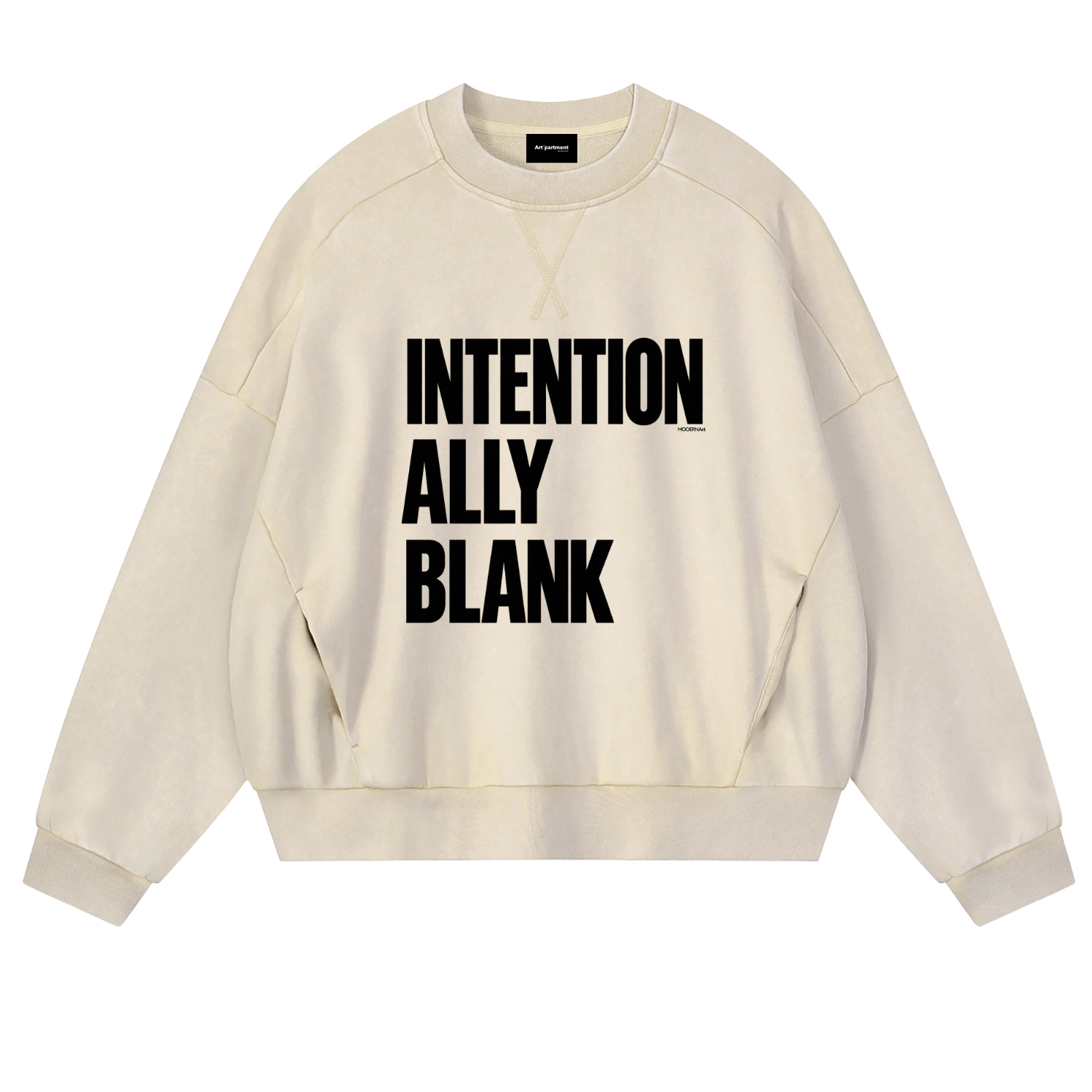
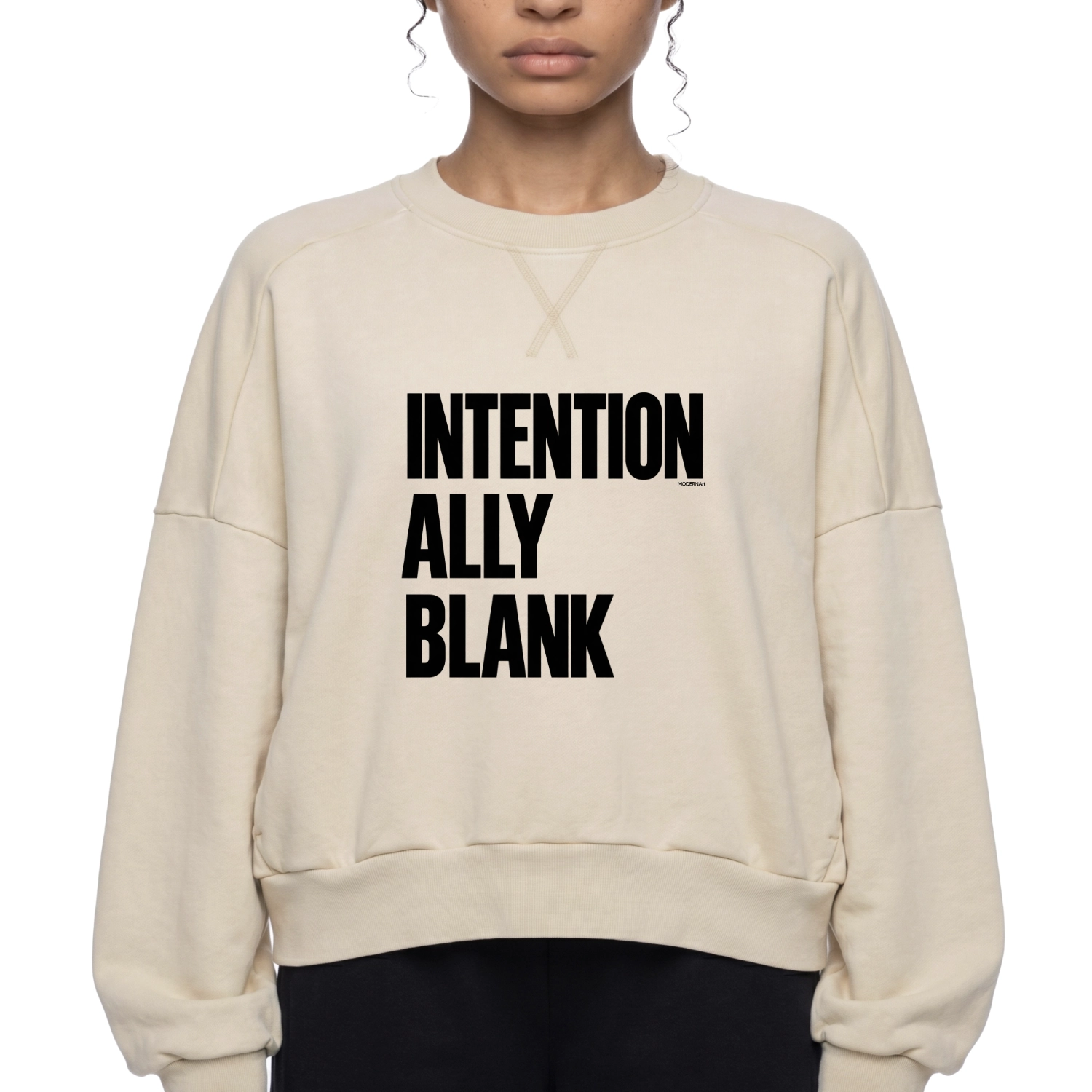
INTENTIONALLY BLANK – An Act of Silence in Space
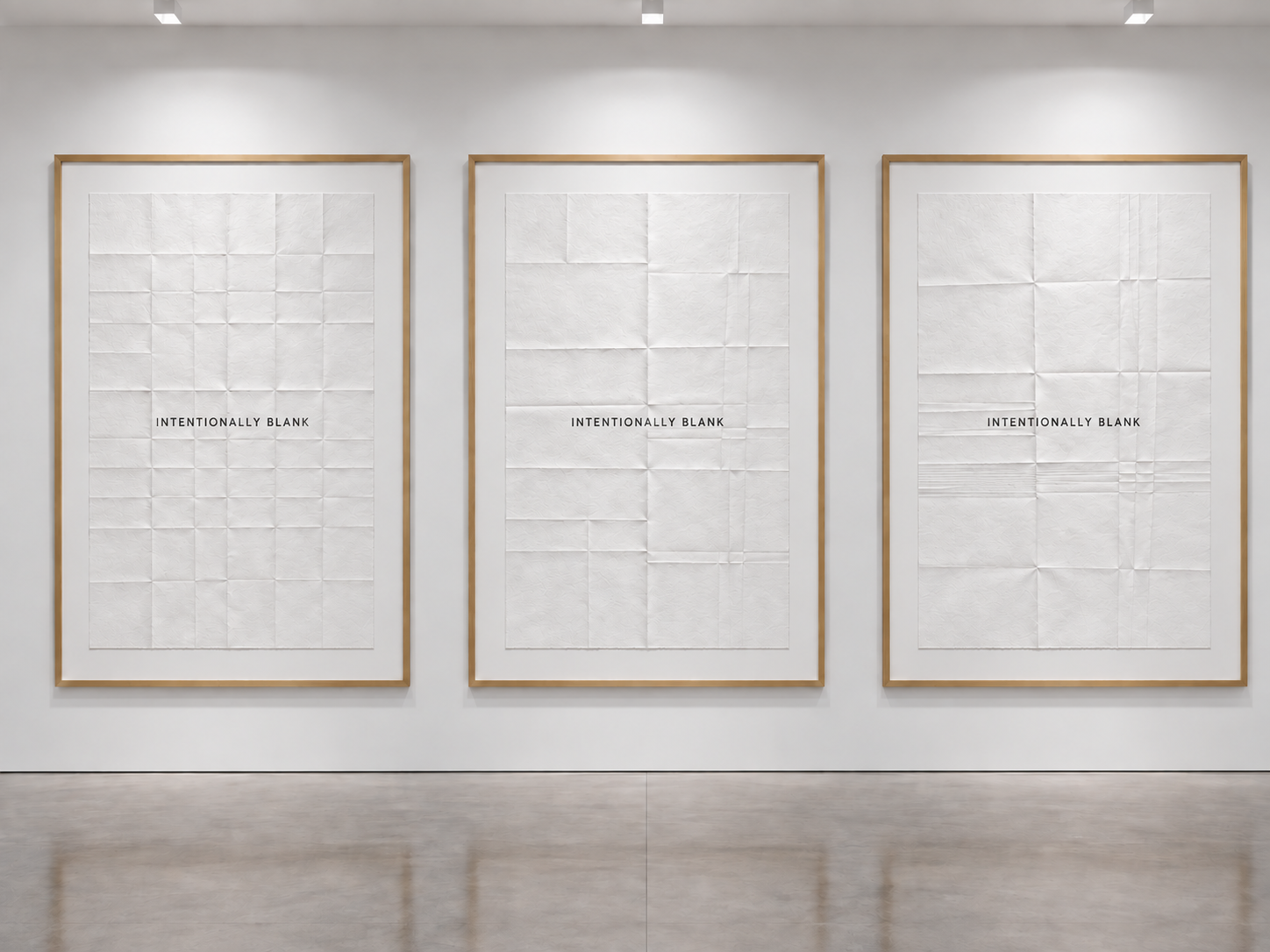
With this latest project, CL orchestrates a silent yet radical intervention: in an almost entirely emptied 90-square-meter space, a few large-format white paper works hang on the walls. Centered on each, in small typography, are the words: “INTENTIONALLY BLANK”—a statement aware of its own paradox, which it then puts to productive use.
The paper works are meticulously pre-folded, bearing visible creases as if they had previously waited inside a small envelope for an unfolding yet to come. This folding is more than just a formal reference; it points to a potential content that is deliberately withheld. The works create a tension between expectation and presence.
One and the same sheet (100 × 120 cm) is presented in various frame sizes. The format is variable—determined by the decision of how many times to fold the paper, how much to reveal, and what to keep hidden. The result is an edition that defies the conventional notion of a series: similar, yet never identical. The collector becomes a co-creator.
Concurrently, the sheets are folded and placed into boxes, signed, and accompanied by a certificate of authenticity. This process, too, is public and part of the performance: the act of packing, organizing, and certifying—in its matter-of-fact execution—becomes the art itself.
On another wall, DIN A3-sized “instructions for use” are displayed, offering guidance on how to participate. Here, the act of acquisition is not an external transaction, but an integral part of the artistic concept. The visitor is invited to take part in this artistic process. “INTENTIONALLY BLANK” is not a statement of emptiness, but a precise reference to what is read, expected, or sought within an art context—a reflection on authorship, appropriation, documentation, and action. The works themselves serve as future objects of memory, pointing toward personal experience.
Lines and Interpretations
1. Emptiness as a Carrier of Meaning
“The absence of content is itself a content.”
— Marshall McLuhan
The empty surface speaks—not in spite of its silence, but because of it. The inscription “INTENTIONALLY BLANK” at the center does not signify an absence, but rather a deliberate act. It is the decision to refuse meaning that allows new meanings to emerge.
2. The Frame as a Decision
“The frame is the mother of the work.”
— Louise Bourgeois
Whether landscape, portrait, or square—and regardless of whether it is small, medium, or large—the frame chosen by the buyer determines the format of the artwork. While the paper piece remains constant, the framing becomes an individual gesture. Collectors decide on visibility and context—and, in doing so, define the work itself.
3. Repetition as a Principle
“True repetition is not mere reproduction, but a creative act.” — Søren Kierkegaard
The statement remains the same, yet each artwork varies in its details: through manual craftsmanship, folding, stamping, signing, and numbering, every object becomes an original. Repetition transforms into a performative ritual. Art emerges within the act of repeating.
4. Packaging as a Gesture
“The object is not the work of art. The work of art is the process.”
— Eva Hesse
Folding, packaging, signing—processes that typically remain invisible—are here brought to light. The action replaces the object; the act itself becomes a sculpture in motion. 5. Participation and Action
“We are not only spectators, but also actors.”
— Jacques Rancière
Visitors are given instructions for action. They fold, choose, and acquire. The art does not take place solely on the wall—it is completed through a transaction.
4. Remembering, Not Forgetting
The mRNA injections sold in pharmacies—from manufacturers such as Pfizer and Moderna—contained an oversized, neatly folded package insert (100 x 120 cm). While such inserts typically list side effects, this one featured only a single phrase in the center: INTENTIONALLY BLANK.
Send feedback